Corrugated pallets and POP displays that replace wood and hold a shelf
Two products that solve two different problems: a corrugated pallet replaces a wooden one and skips ISPM-15 fumigation entirely; a corrugated display turns a pallet of stock into a selling fixture in one fold. We engineer both around the load they carry and the retail environment they land in.
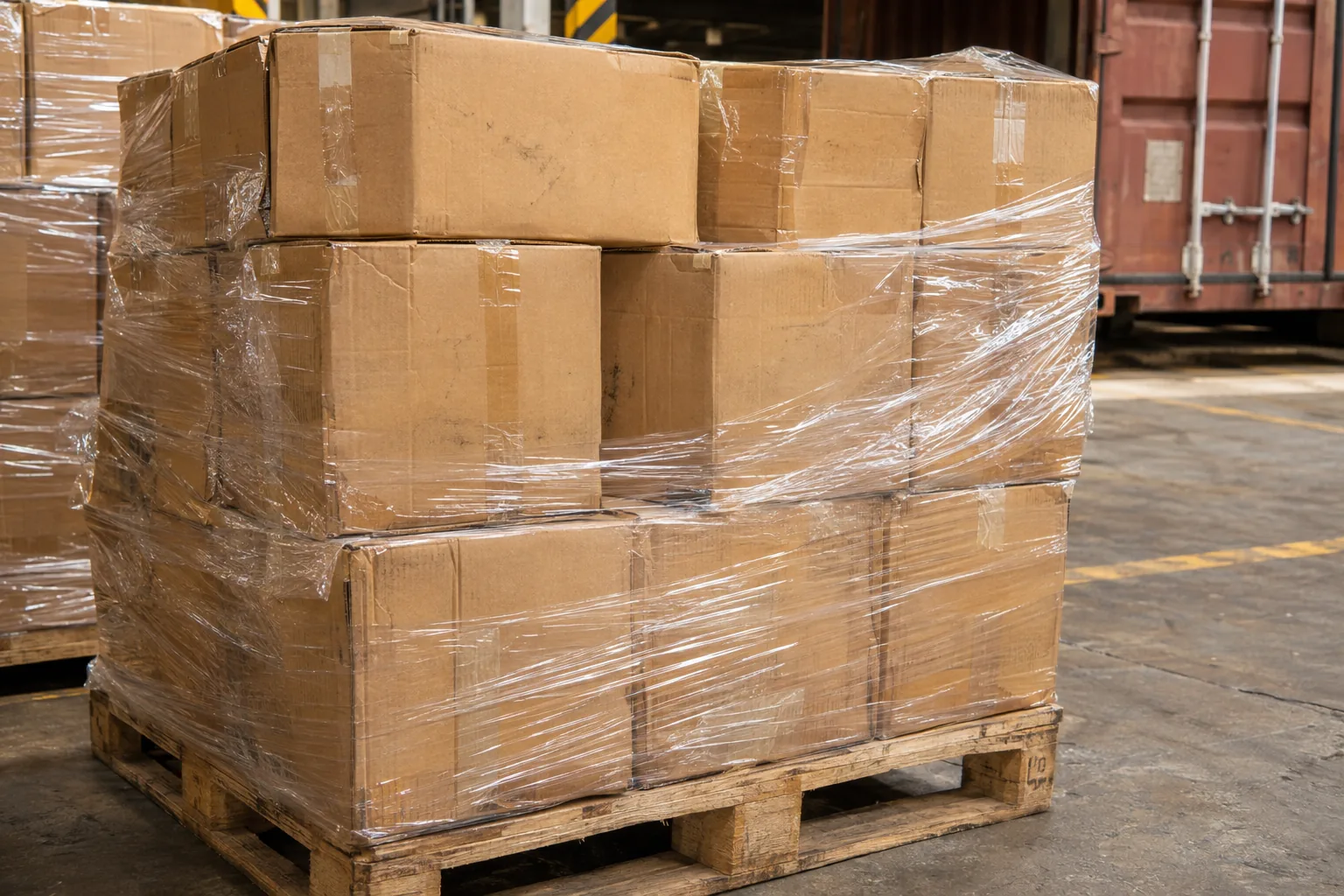
VantaPack manufactures custom corrugated pallets and point-of-purchase display boxes from triple-wall and honeycomb board. Corrugated pallets carry static loads up to 1,500 kg and dynamic loads up to 750 kg, are ISPM-15 exempt so they need no heat treatment or fumigation, and are 100% recyclable. Minimum order is 5,000 pieces per design with print-ready litho-laminated panels, and lead time is 16–22 working days.
When a corrugated pallet beats a wooden one
A corrugated pallet is a structural deck built from triple-wall or honeycomb board, usually with folded or glued stringers. It is not a lighter version of a wooden pallet — it is a different product that wins on specific criteria:
- Export without fumigation. Wood packaging must meet ISPM-15, which means heat treatment and a stamped certificate. Corrugated is exempt. For air freight and LCL shipments to the US, UK, Canada and Australia this removes a documentation step and a port delay.
- Weight. A 1,200 × 1,000 mm corrugated pallet weighs 3.5–6 kg against 18–25 kg for a comparable wooden pallet. On air freight that difference is billed directly.
- Hygiene. No splinters, no mould, no nail heads. This matters for food, pharma and medical device supply chains where wooden pallets are increasingly restricted.
- Print. The deck and stringers can carry brand print, handling instructions and barcodes that survive the full journey.
- Disposal. Flattens into the same recycling stream as the boxes on top of it. No pallet pool, no return freight, no disposal fee at destination.
The trade-off is moisture and repeated use. Corrugated pallets are one-way or limited-reuse products. In a humid ambient warehouse, a standard pallet loses roughly 30–40% of its compression strength after 48 hours at 90% RH. For chilled or frozen chains we specify a water-resistant coating, which restores most of that loss.
Corrugated vs. wood vs. plastic pallets
| Criteria | Corrugated | Wood | Plastic |
|---|---|---|---|
| ISPM-15 treatment | Not required | Required | Not required |
| Unit weight (1.2 × 1.0 m) | 3.5–6 kg | 18–25 kg | 14–20 kg |
| Static load | 500–1,500 kg | 1,500–4,000 kg | 1,000–2,500 kg |
| Reuse cycles | 1–3 | 10–20 | 50–100 |
| Indicative cost | $6–$14 | $9–$18 | $22–$38 |
| Recyclability | Kerbside paper | Specialist | Limited streams |
| Food contact | Suitable | Restricted | Suitable |
Choose corrugated for one-way export, air freight, food and pharma, and any lane where fumigation documentation is a bottleneck. Choose wood when the pallet must survive a decade in a closed loop. Choose plastic when you need washdown and a fixed asset register.
POP displays: the fixture and the shipper in one
A pallet display arrives at the store loaded, gets its outer shroud removed, and becomes the selling fixture. That single requirement drives the whole design — the structure has to protect product in transit and present it on the floor without a second assembly step.
The formats we build most:
- Pallet display (PDQ / half-pallet): sits on a standard pallet, 1,200 × 800 mm or 1,200 × 1,000 mm footprint, typically 1,200–1,500 mm tall loaded. The workhorse for grocery and mass retail.
- Floor-standing display: free-standing unit with its own base, 1,500–1,800 mm tall, used where no pallet position is available.
- Counter unit: 200–400 mm footprint for checkout and pharmacy counters, usually litho-laminated for photo-quality graphics.
- Shelf-ready tray (SRP): a low tray with a tear-away front that slides straight onto an existing shelf. The cheapest way to get brand presence in a planogram.
- Dump bin: open-top bin for promotional volume — confectionery, small electronics, seasonal.
What we need to engineer a display
Display projects fail on missing inputs, not on printing. Before we can prototype, we need:
- Product dimensions and weight — individual unit plus total loaded weight. This sets the board grade and the number of internal shelves.
- Unit count per display — how many facings, how many rows deep. This defines the shelf pitch and the pocket depth.
- Retailer requirements — many chains specify maximum footprint, maximum height, and a required header height. Target, Walmart and Kroger all publish their own specs and they are not the same.
- Loading method — hand-loaded at the DC, or pre-loaded at your factory and shipped as a shipper. Pre-loading is faster in-store but adds freight volume.
- Artwork with bleed — 3 mm bleed, CMYK, 300 dpi, with a dieline layer supplied separately. If you have no artwork, we can lay out the panel structure and hand it to your designer.
Typical timeline for a display programme
Structural concept 3–5 days → white prototype 7–10 days (courier) → artwork and print proof 5–7 days → production 16–22 working days → sea freight to US West Coast 18–24 days. Start to in-store is realistically 12–14 weeks. Retail promotional windows are booked months ahead, so the structural brief should be locked before artwork begins.
Specifications
| Product scope | Stringer pallets, block pallets, one-way export pallets, pallet top caps, slip sheets, floor-standing POP displays, counter units, pallet displays (PDQ), shelf-ready trays and dump bins. |
| Board construction | Triple-wall BCB or BAB for pallet stringers and decks · double-wall BC for display bodies · honeycomb 20–40 mm core for high compression decks. |
| Static load | Corrugated pallet: 500–1,500 kg static (floor stacked) depending on deck design and span. |
| Dynamic load | 250–750 kg dynamic, tested to ISO 8611-1 for racking and forklift handling. |
| Dimensions | Standard 1,200 × 1,000 mm and 1,200 × 800 mm; custom to 2,400 × 1,200 mm. Height 100–150 mm for stringer pallets. |
| Flexo 1–4 colour direct, or litho-laminated face panels for display graphics. Photo-quality CMYK available on display fronts. | |
| Water resistance | Wax-free water-resistant coating or PE lamination available for chilled and frozen distribution. |
| Minimum order | 5,000 pcs per design · 1,000 pcs for structural prototypes |
| Tooling | Die $260–$680 for pallets · $320–$780 for displays. Stored free for reorders. |
| Production lead time | 16–22 working days after artwork and structural approval · 7–10 day structural prototype |
| Compliance | ISPM-15 exempt (no wood) · ISO 8611 pallet testing · FSC certified board · ISTA-3A for loaded displays |
| Export advantage | No fumigation certificate, no heat-treatment stamp, no phytosanitary delay at destination ports. |
Corrugated pallet construction: triple-wall stringers under a honeycomb or double-wall deck, with print applied to the deck face.
Pallet and display FAQ
How much weight can a corrugated pallet hold?
A standard 1,200 × 1,000 mm triple-wall corrugated pallet carries 500–1,500 kg static load when floor stacked, and 250–750 kg dynamic load when moved by forklift or pallet jack. Load capacity depends on deck span, stringer design and humidity. We test prototypes to ISO 8611 and report the actual figure for your specification.
Are corrugated pallets ISPM-15 exempt?
Yes. ISPM-15 applies to solid wood packaging. Corrugated pallets contain no solid wood, so they require no heat treatment, no methyl bromide fumigation and no phytosanitary certificate. This is the main reason exporters switch for air freight and LCL lanes.
Can a corrugated pallet be used more than once?
Typically one to three cycles. Corrugated pallets are designed as one-way packaging. Repeated handling in humid conditions degrades compression strength. If you need a reusable pallet in a closed loop, plastic or wood is the better choice.
What is the minimum order for a custom display?
5,000 pieces per display design for production, and 1,000 pieces for a structural prototype run. White prototypes (unprinted, for fit testing) can be made from 1 piece in 7–10 days.
Do you design the display structure or do we need to supply a dieline?
We design it. Send product dimensions, unit count per display, target retailer and any footprint or height restrictions, and our structural team returns a concept and a white prototype. There is no design fee for projects that proceed to production.
Can displays be shipped pre-loaded with product?
Yes. Pre-loading at our factory turns the display into a shipper — the retail DC receives a sealed pallet and the store removes the shroud. It costs more in freight volume but removes 20–40 minutes of in-store labour per display.
Are the displays recyclable after the promotion ends?
Yes. The structure is paper-based and recyclable in kerbside streams, provided non-paper components such as plastic hooks or LED units are removed. We can design the display to avoid mixed materials entirely if your retailer requires it.
Related pages
Heavy-Duty Packaging
Triple-wall and honeycomb for heavy loads.
Die-Cut & Printed Boxes
Retail-ready litho cartons with premium finishing.
Corrugated Materials Guide
Flute profiles, ECT and liner grades.
Industries We Serve
Retail, consumer goods and industrial applications.
Manufacturing Capabilities
Corrugator, die-cutter and ISTA test lab.
Request a Quote
Send specs and get a price within one business day.
Planning a display programme or switching away from wood pallets?
Send product dimensions, unit count per display and target retailer. We'll return a structural concept, ISO 8611 load estimate and a landed-cost comparison against your current wooden pallet.