Corrugated packaging resources for buyers
Most packaging content online is written to rank, not to answer. These guides come from the production floor: the numbers we quote, the tests we run, and the reasons shipments get rejected. Free, no email required.
This resource library covers three things buyers need before placing a corrugated order: compliance requirements (ISTA, FBA, retailer specs), real price bands by box type and volume, and board selection based on load and transport mode. All figures are FOB Shenzhen from VantaPack's own production, not aggregated market averages.
Start with the guide that matches your problem
Each guide is standalone. If you are comparing suppliers, read the price guide first. If a retailer or marketplace rejected a shipment, read the compliance guide.

Amazon FBA packaging requirements
What actually gets a shipment rejected at an Amazon fulfilment centre — ISTA-6 SIOC, box strength, labelling, poly bag rules — and how to test before you ship.
12 min read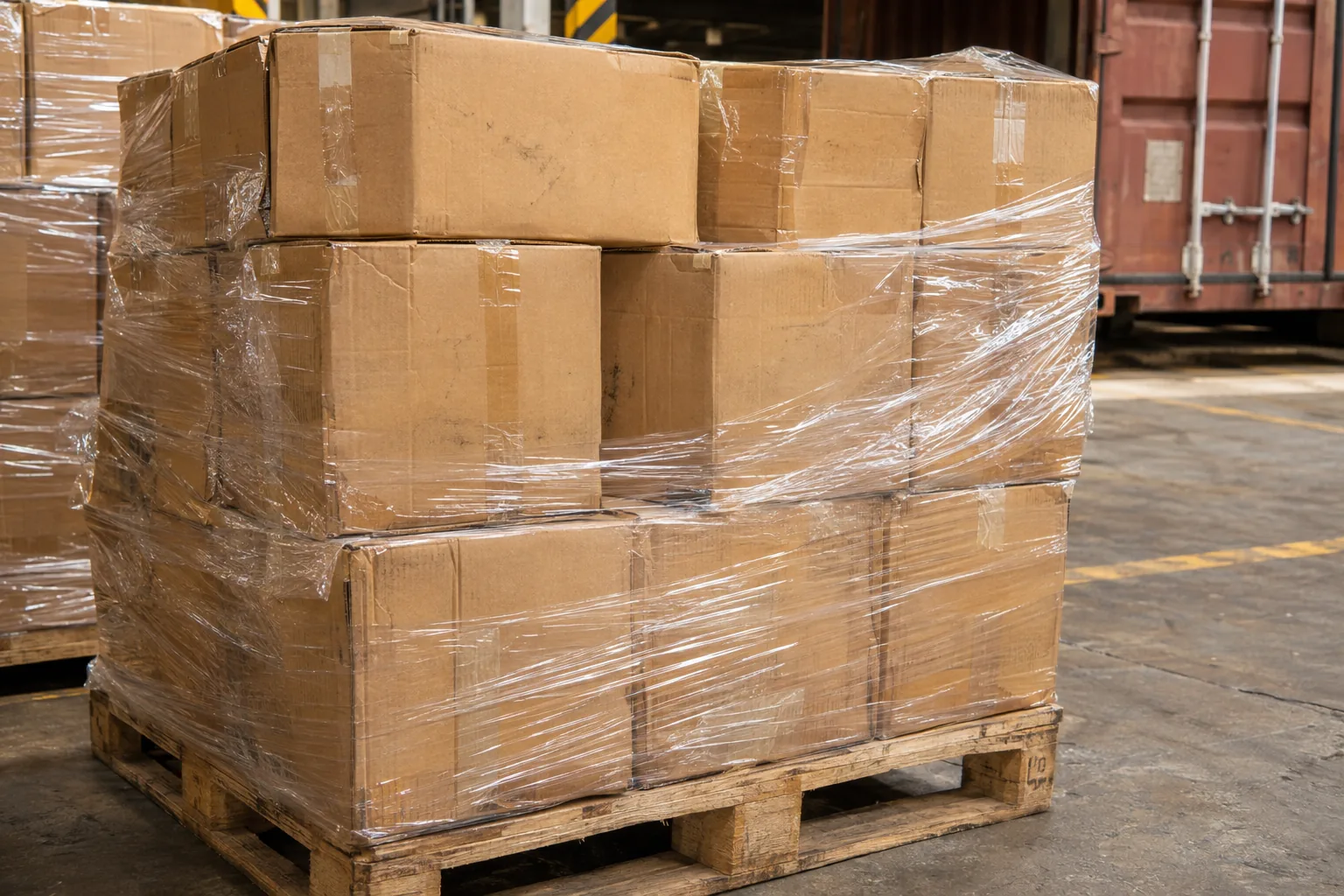
Corrugated box price guide
Real FOB China price bands by box type and volume, the five cost drivers that move a quote, and how to read a quotation when two suppliers differ by 40%.
10 min read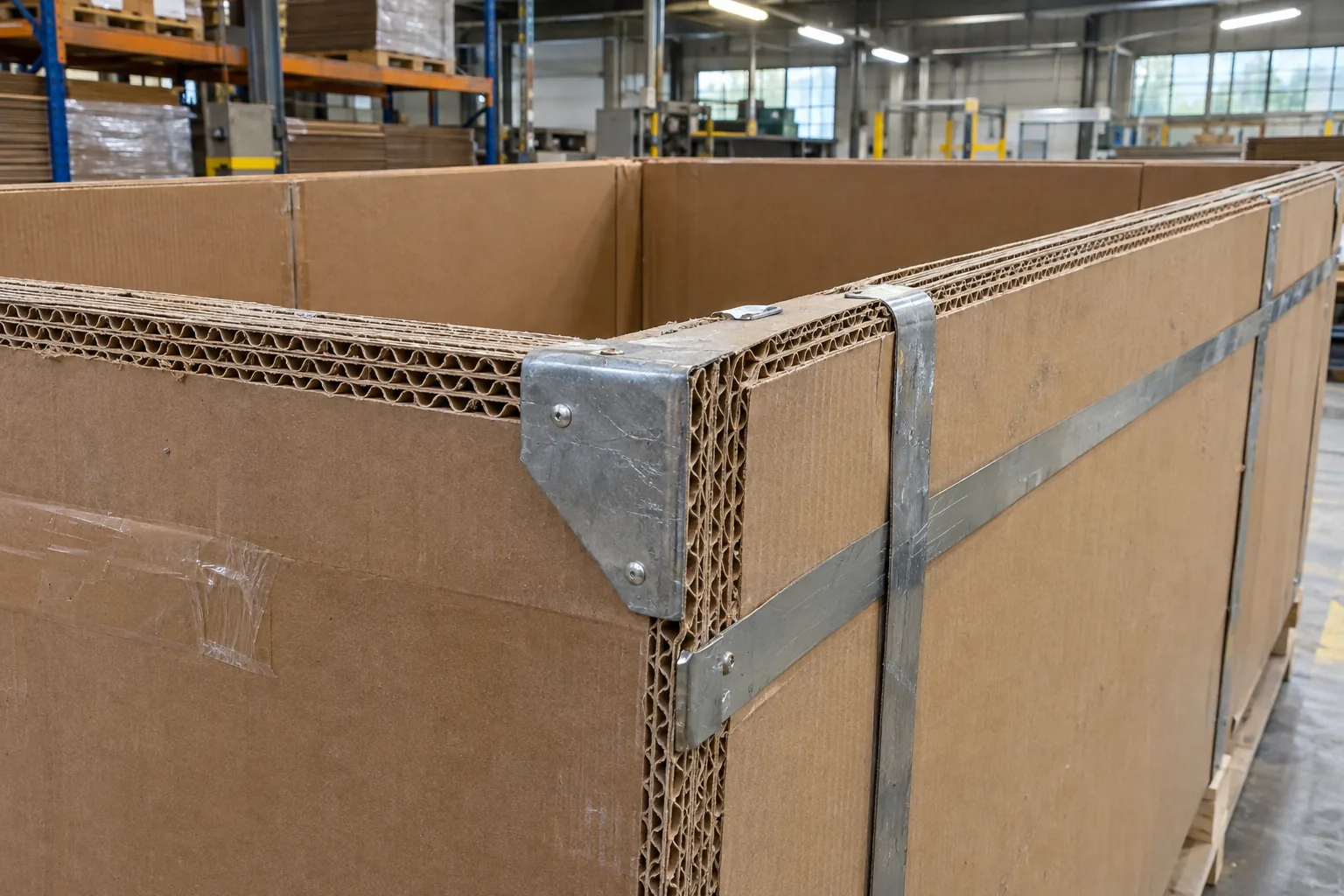
Corrugated materials guide: ECT, flutes, liners
ECT versus Mullen, flute profiles from A to F, single/double/triple wall construction and how humidity destroys compression strength.
14 min read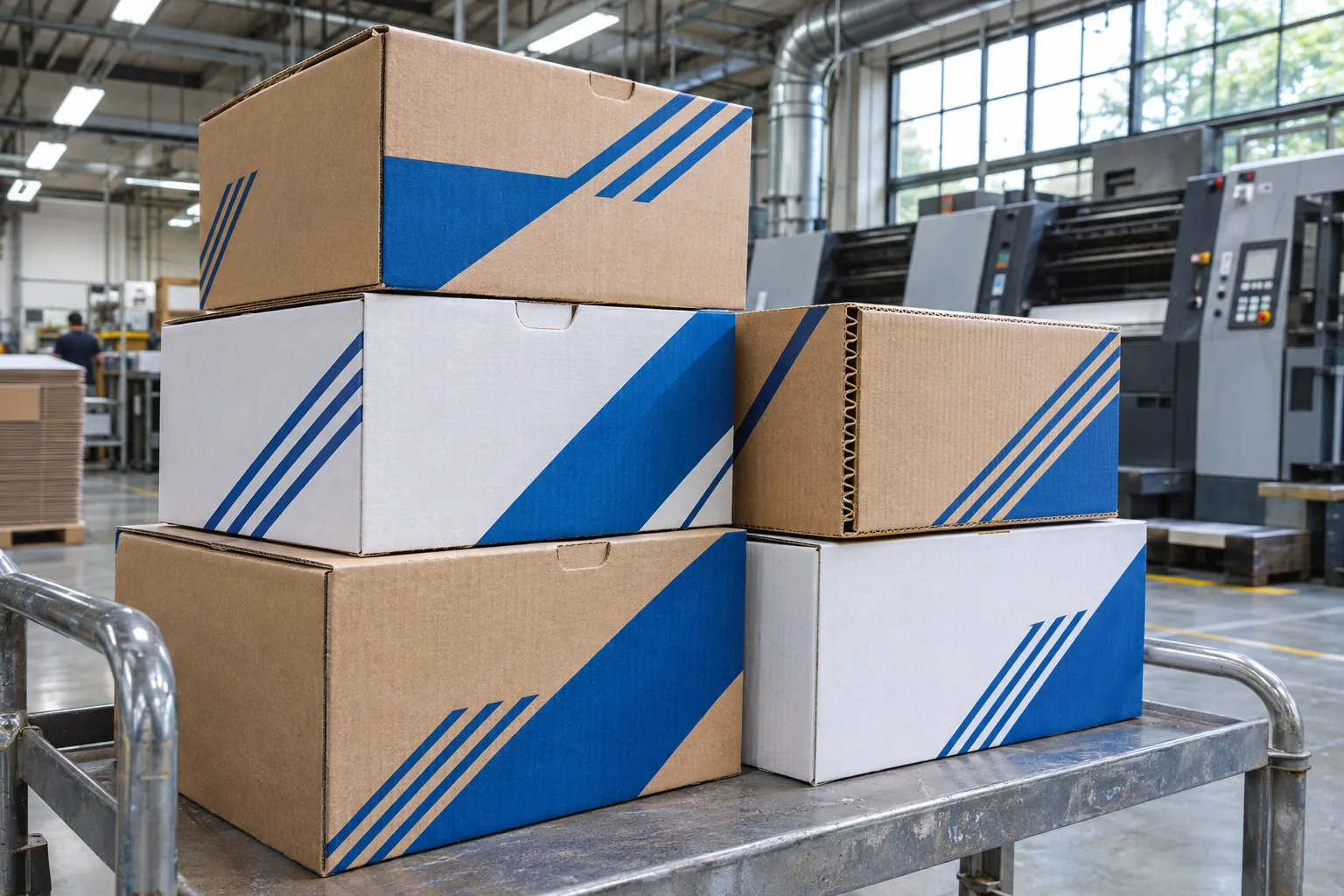
Frequently asked questions
MOQ, lead times, sampling, tooling ownership, Incoterms and payment terms — the 12 questions buyers ask before placing a first order.
8 min readThe terms that come up in every packaging quote
If a supplier uses one of these and you are not sure what it means, the definition is usually where the cost difference hides.
BCT
Box Compression Test — the load a finished, closed box withstands top-to-bottom. Predicted from ECT and box perimeter by the McKee formula.
ECT
Edge Crush Test — the load a board sample withstands on its edge, in lb/in. The primary predictor of stacking strength.
Mullen
Bursting strength test — pressure required to rupture the liner, in psi. Predicts puncture and rough-handling resistance.
SIOC
Ships In Own Container — an Amazon programme allowing a product to ship without an over-box, requiring ISTA-6 testing.
ISTA
International Safe Transit Association — publishes the drop, vibration and compression test protocols (1A, 3A, 6-Amazon) most retailers require.
RSC
Regular Slotted Container — the standard shipping box with four flaps meeting at the centre of the top and bottom.
FEFCO
European federation of corrugated board manufacturers — publishes the standard library of box styles (0201 = RSC).
ISPM-15
International standard for solid wood packaging in export. Corrugated pallets are exempt because they contain no solid wood.
CBM
Cubic metre — the volumetric measure used to price ocean freight. Flat-packed boxes ship at roughly 8–12% of assembled volume.
DIM weight
Dimensional weight — carriers bill the greater of actual weight and L × W × H ÷ divisor. Oversized boxes are charged more.
Get a specification before you get a price
A price without a specification is not comparable between suppliers. Two quotes for "a box" can differ by 300% because one is 32 ECT single wall and the other is 48 ECT double wall with litho print. Every guide here follows the same order: define the load, define the transport, then choose the board, then price it.
- Step 1 — load. Product weight, unit count per box, stack height in the container or warehouse.
- Step 2 — transport. Parcel, LTL, FCL, air freight. Each applies different drop and vibration forces.
- Step 3 — board. ECT and flute profile from the load and stack height, liner grade from the print requirement.
- Step 4 — structure. RSC for freight, die-cut for retail, mailer for DTC, triple-wall for industrial.
- Step 5 — price. Board cost plus print plus finishing plus tooling amortised over quantity.
What a spec review includes
Send product dimensions and weight and we return, without charge:
- Recommended ECT and flute profile
- Predicted BCT and safe stack height
- Internal dimension calculation with board caliper allowance
- Indicative unit price at three quantity breaks
- Tooling cost and lead time
- Optional ISTA test plan
Typical turnaround: one business day.
Have a packaging problem these guides don't cover?
Ask us directly. Structural questions, retailer rejections, cost reduction on an existing box — we answer with numbers rather than a sales brochure.